Geneva sits beside an international border, serves both city travellers and the French Alps, and has an airport with Swiss and French sectors. That geography creates useful choices, but it also encourages false shortcuts. Cheap flights from Geneva are found by keeping the air ticket, airport sector, ground transfer, currency and baggage in one calculation. A lower fare through Lyon or Basel can work; a vaguely planned cross-border transfer can cost more and take far longer than the Geneva departure it replaces.
Understand Geneva Airport's two sectors
Geneva Airport has Swiss and French sectors, but they are not two independent airports with duplicate access to every flight. The French sector exists for particular cross-border movements and has specific access arrangements. Which side you can use depends on the flight and how you approach or leave the airport. Check the airport's current official instructions for your exact journey before treating a sector change as part of a bargain.
Avoid ski-season fare traps
Most travellers reaching the airport from central Geneva use the Swiss side. The rail connection links the airport with Geneva railway station and makes a city departure relatively simple. Someone driving from France may have a different practical route, especially when hiring or returning a car. Rental contracts can also distinguish the country where a vehicle is collected, driven or returned, so the apparent convenience of the French sector should be verified with the rental company.
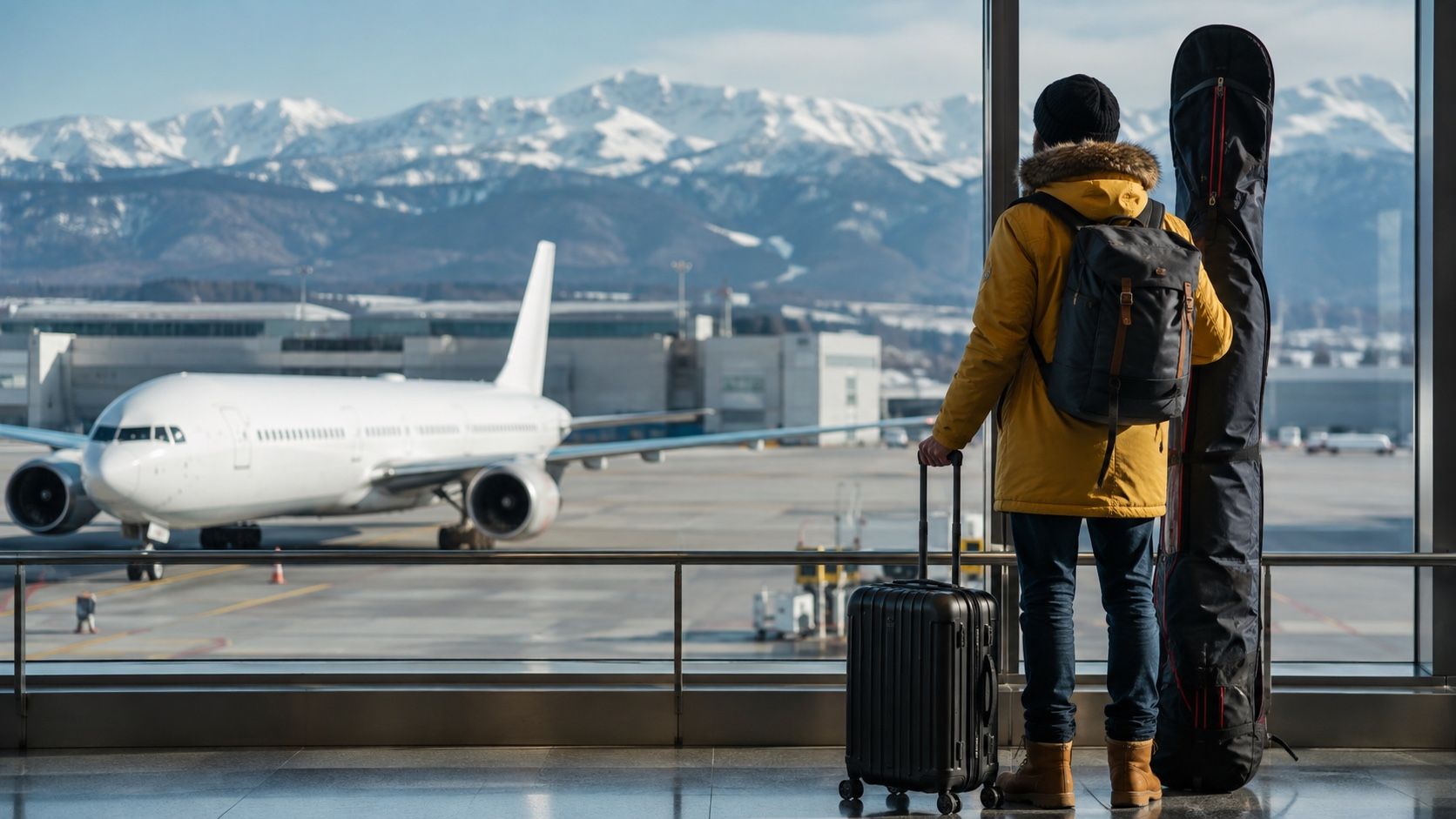
I would not choose a flight merely because a search snippet associates it with one sector. First confirm the terminal instructions on the booking and airport information, then plan the ground leg. Allow time for signs, security and any border formalities relevant to the trip. The building is compact by major-hub standards, yet arriving at the wrong access point with skis and luggage is an avoidable way to lose the benefit.
Demand around weekends and school-holiday periods can push Geneva fares upward when travellers are heading to resorts in the French Alps and Switzerland. A cheap Saturday ticket may disappear once a ski bag is added, while a slightly dearer weekday fare can offer calmer transport and better transfer choices. Compare Thursday, Friday and Sunday patterns, not only adjacent flight prices.
Ground capacity matters during ski season. Shared transfers, coaches and rental cars can sell out or rise in price, and winter road conditions make narrow connections unwise. Use the scheduled arrival plus a realistic allowance for bags and queues when selecting onward transport. A transfer that leaves minutes after landing is not a saving if missing it means buying another seat or waiting for hours.
The return journey is often the harder half. Resort traffic can be slow, equipment takes time to load, and early departures demand a very early start. Price an airport hotel only if it truly improves the itinerary; otherwise it can erase a fare advantage. For a short ski trip, paying a modest direct-flight premium may preserve more time on the mountain than a distant-airport detour.
Compare Lyon and Basel only with transport included
Lyon Airport and Basel EuroAirport can widen the route search, particularly when Geneva has weak competition to a destination. Neither should be treated as a simple substitute for Geneva Airport. From Geneva, Lyon requires a substantial ground journey into France. Basel lies in another direction and has its own cross-border airport arrangements. Map the origin to the terminal, not city centre to city centre.
| Departure choice | Useful when | Costs and risks to add |
|---|---|---|
| Geneva Airport | The route is direct or well timed | Local transport, bags and seasonal fare premium |
| Lyon Airport | The fare gap is large or the route is unavailable at Geneva | French ground transport, road or rail connections, possible hotel |
| Basel EuroAirport | Its network fits the destination much better | Long positioning journey, cross-border details and return timing |
Regional alternatives favour longer trips and larger savings. A family may share a car but pay more for parking and fuel; a solo traveller may find public transport economical but inflexible. Check the final return connection before booking the outbound. A late landing at Lyon or Basel can leave no comfortable same-night route to Geneva, adding accommodation to what looked like one of the cheapest flights from Geneva's wider region.
Separate positioning also creates separate risk. If a train, coach or road journey is delayed, the airline does not normally treat that as an incoming flight connection. Build a generous buffer and understand what a replacement ticket would cost. The farther airport is attractive only when the saving survives both the planned costs and a sensible allowance for disruption.
Use currency and point-of-sale checks carefully
Geneva searches can show Swiss francs, euros or a card's converted home currency. Compare final totals in one currency using a realistic card rate, including any foreign-exchange fee. An airline's offered conversion may be convenient without being the best rate. Declining it can help with some cards, but the correct choice depends on the card agreement rather than a universal rule.
Changing the website country or currency may alter how a fare is displayed, but it can also change payment methods, conditions or included services. Keep the passenger residence and required details accurate. If two legitimate points of sale show different totals, carry both bookings to the final payment screen without purchasing and compare the same fare bundle. A cheaper base price in euros is irrelevant if a bag or seat differs.
Card verification matters when a fare is moving quickly. Make sure the payment method can complete online authentication and has enough headroom for currency fluctuations or a temporary authorization. Never refresh into multiple purchases after an uncertain payment; first check email and the airline account for a booking reference. Geneva flight deals are not improved by accidentally buying the same itinerary twice.
Price sports equipment and bags
easyJet and other carriers serving Geneva sell different baggage products, and the lowest fare may include only a small under-seat item. Use current airline dimensions and weight limits for the exact ticket. A standard cabin trolley, checked suitcase and ski or snowboard bag are separate categories on many bookings. Add them before deciding which airline is cheapest.
Sports equipment needs more than a fee check. Read packing requirements, maximum weight and whether boots or helmets can share the bag. Reserve equipment early if the airline limits capacity. A group should compare one shared checked bag with several cabin upgrades, but only after checking weight and access to essentials in case the checked item is delayed.
Ground transport must accept the same luggage. A compact rental car that looks inexpensive may not hold four passengers and ski bags. Coaches and shared transfers may require advance equipment declaration. On the Geneva railway connection, handling remains your responsibility, so allow extra time rather than planning a sprint with oversized cases.
Choose a workable cross-border itinerary
Build a baseline from Geneva Airport with the required bag, city transport and a schedule you can actually use. Then price Lyon or Basel with every connection, fuel or ticket, parking, possible hotel and extra travel time. Convert all totals to one currency. This makes cheap flights from Geneva to anywhere results comparable instead of merely interesting.
For the airport-sector decision, verify the flight's access instructions and the side from which you will arrive. For a ski trip, confirm the transfer accepts equipment and remains realistic after baggage reclaim. For a nearby-airport option, leave enough positioning time that a normal railway, road or border delay does not force a new ticket.
A sensible threshold depends on the trip. I accept less inconvenience for a weekend than for a two-week holiday, and I demand a larger saving for an unprotected ground connection. Book the option whose complete cost and timing still look good when viewed without the search engine's headline fare. Cross-border geography is useful when it creates a real choice, not when it hides three additional journeys behind one cheap ticket.